At the link po the right you can open a PDF document with the ferry timetable Orebić (Pelješac) - Korčula (Dominče) for 2025 year.
Please pay attention to the different timetables (winter, spring / autumn and summer) timetable.
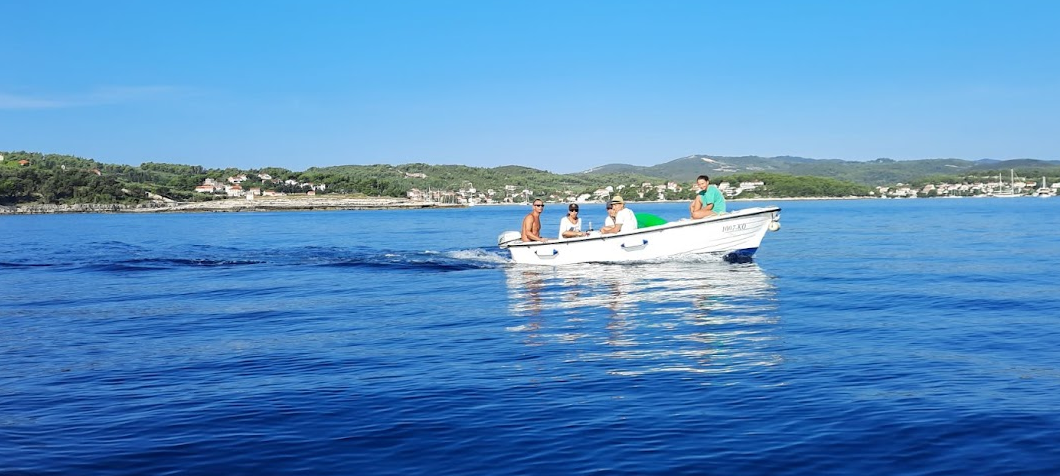
In the center of Lumbarda (at the marina) you can rent a boat and sail to any of the 22 surrounding islets. The islets are really interesting, one of them even has its own cave, and most of them have small pebble coves.
We recommend:
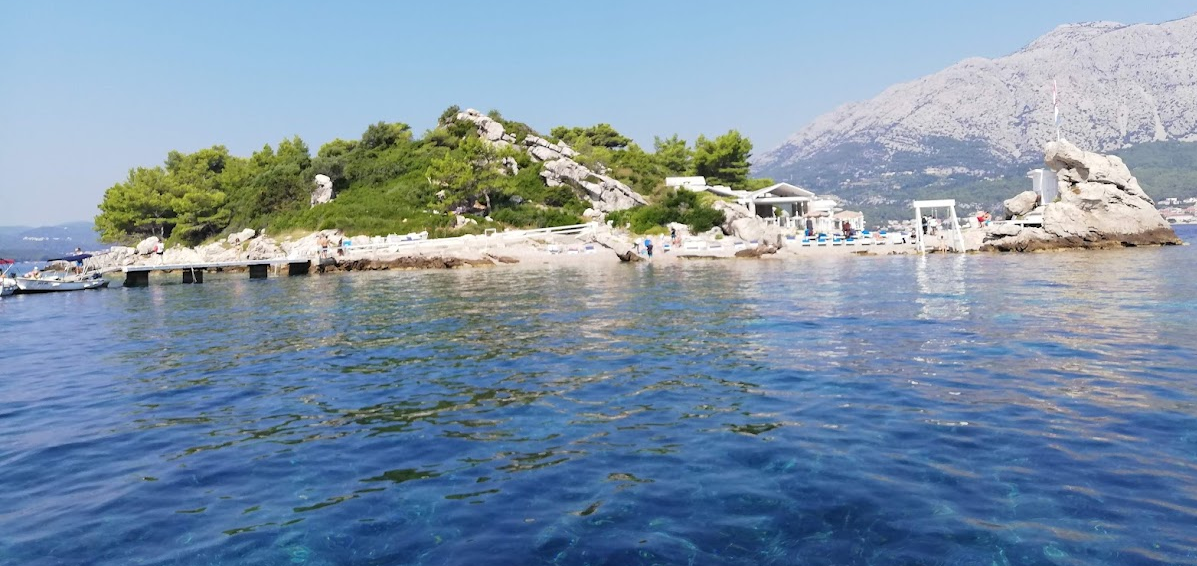
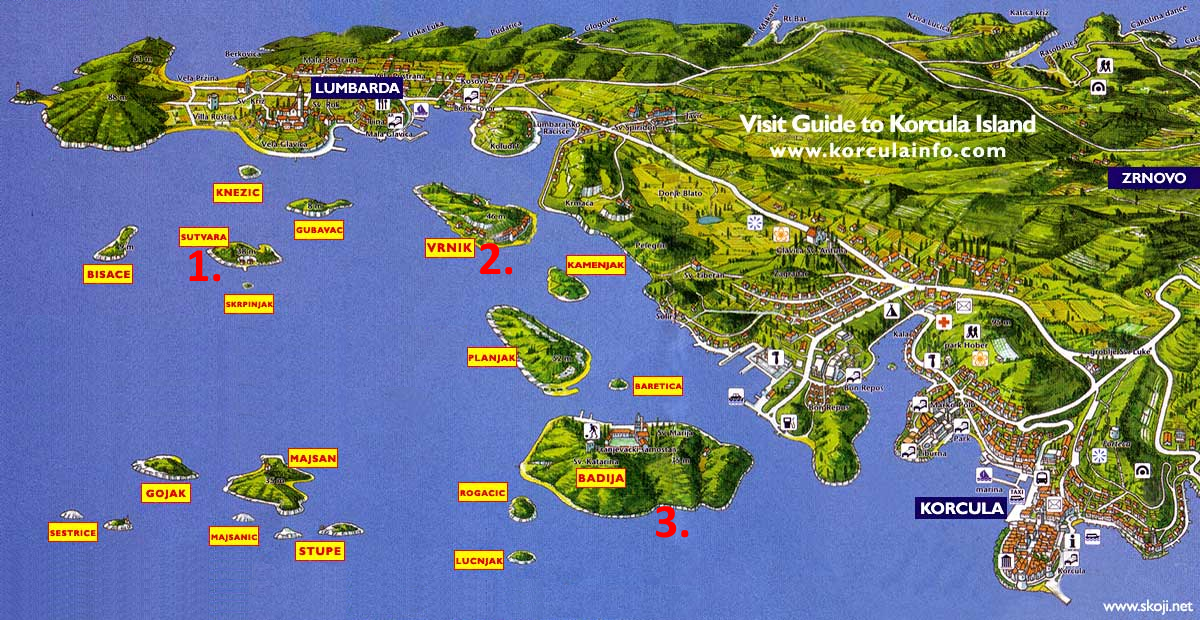
Sutvara (1st): has two pebble beaches and lush vegetation. On the north side there is a small pier and behind it an abandoned quarry. The path that leads past the quarry towards the top of the islet takes you to a small cave without stalactites, about 15-20 meters long.
Vrnik (2nd): is the island where the oldest quarry in Korčula is located (from the Neolithic period; there is also a record that Diocletian sent prisoners to this island to commute their death sentences). From the 14th century onwards, stone carved on the island of Vrnik was exported to Dubrovnik, and later to Šibenik and Zadar. Some palaces in Dubrovnik, as well as in Venice, Vienna and even Washington, were built from Vrnik stone.
Attention: there are also some ancient objects under the water in the vicinity of the pier. If you want to appropriate such an object and take it as a souvenir and you're caught by the police, you are threatened with a fine of 2000 Eur.
Badija (3rd): The island of Badija first appears in history in 1368 as the island of St. Peter (Scolenum sancti Petri), and in 1392 it was succeeded by the Franciscans. The name Badija was given after the monastery (Latin abbatia - abbey).
At the link po the right you can open a PDF document with the ferry timetable Orebić (Pelješac) - Korčula (Dominče) for 2025 year.
Please pay attention to the different timetables (winter, spring / autumn and summer) timetable.
In the center of Lumbarda (at the marina) you can rent a boat and sail to any of the 22 surrounding islets. The islets are really interesting, one of them even has its own cave, and most of them have small pebble coves.
We recommend:
Sutvara (1st): has two pebble beaches and lush vegetation. On the north side there is a small pier and behind it an abandoned quarry. The path that leads past the quarry towards the top of the islet takes you to a small cave without stalactites, about 15-20 meters long.
Vrnik (2nd): is the island where the oldest quarry in Korčula is located (from the Neolithic period; there is also a record that Diocletian sent prisoners to this island to commute their death sentences). From the 14th century onwards, stone carved on the island of Vrnik was exported to Dubrovnik, and later to Šibenik and Zadar. Some palaces in Dubrovnik, as well as in Venice, Vienna and even Washington, were built from Vrnik stone.
Attention: there are also some ancient objects under the water in the vicinity of the pier. If you want to appropriate such an object and take it as a souvenir and you're caught by the police, you are threatened with a fine of 2000 Eur.
Badija (3rd): The island of Badija first appears in history in 1368 as the island of St. Peter (Scolenum sancti Petri), and in 1392 it was succeeded by the Franciscans. The name Badija was given after the monastery (Latin abbatia - abbey).
At the link po the right you can open a PDF document with the ferry timetable Orebić (Pelješac) - Korčula (Dominče) for 2025 year.
Please pay attention to the different timetables (winter, spring / autumn and summer) timetable.
Homemade olive oil, wine and herb brandy (travarica):
We also produce olive oil and wine. We grow all crops naturally and do not use any pesticides.
We produce white wine (the indigenous and very famous Grk) and red wine (Plavac mali).
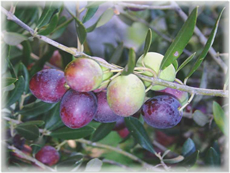
In our olive groves we have various varieties of olives such as: Lastovka, Oblica, Bjelica, ...
In the center of Lumbarda (at the marina) you can rent a boat and sail to any of the 22 surrounding islets.
The islets are really interesting, one of them even has its own cave, and most of them have small pebble coves. We recommend:
Sutvara (1st): has two pebble beaches and lush vegetation. On the north side there is a small pier and behind it an abandoned quarry. The path that leads past the quarry towards the top of the islet takes you to a small cave without stalactites, about 15-20 meters long.
Vrnik (2nd): is the island where the oldest Korčula quarry is located (from the Neolithic period; there is also a record that Diocletian sent prisoners to this island to commute their death sentences). From the 14th century onwards, stone carved on the island of Vrnik was exported to Dubrovnik, and later to Šibenik and Zadar. Some palaces in Dubrovnik, as well as in Venice, Vienna and even Washington, were built from Vrnik stone.
Attention: there are also some ancient objects under the water in the vicinity of the pier. If you want to appropriate such an object and take it as a souvenir and you're caught by the police, you are threatened with a fine of 2000 Eur.
Badija (3rd): The island of Badija first appears in history in 1368 as the island of St. Peter (Scolenum sancti Petri), and in 1392 it was succeeded by the Franciscans. It was named Badija after the monastery (lat. abbatia - abbey).
At the link on the right you can open a PDF document with the ferry timetable Orebić (Pelješac) - Korčula (Dominče) for 2025 year.
Please pay attention to the different timetables (winter, spring / autumn and summer) timetable.
Homemade olive oil, wine and herb brandy (travarica):
We also produce olive oil and wine. We grow all crops naturally and do not use any pesticides.
We produce white wine (the indigenous and very famous Grk) and red wine (Plavac mali).
In our olive groves we have various varieties of olives such as: Lastovka, Oblica, Bjelica, ...
In the center of Lumbarda (in the marina) you can rent a boat and sail to any of the 22 surrounding islands.
The islands are really interesting, one of them even has its own cave, and most of them have small pebble coves. We recommend:
Sutvara (1st): has two pebble beaches and lush vegetation. On the north side there is a small pier and behind it an abandoned quarry. The path that leads past the quarry towards the top of the islet takes you to a smaller cave without stalactites, about 15-20 meters long.
Vrnik (2nd): is the island where the oldest Korčula quarry is located (from the Neolithic period; there is also a record that Diocletian sent prisoners to this island to commute their death sentences). From the 14th century onwards, stone carved on the island of Vrnik was exported to Dubrovnik, and later also to Šibenik and Zadar. Some palaces in Dubrovnik, as well as in Venice, Vienna and even Washington, were built precisely from Vrnik stone.
Attention: there are also some ancient objects under the water in the vicinity of the pier. If you want to appropriate such an object and take it as a souvenir and you're caught by the police, you are threatened with a fine of 2000 Eur.
Badija (3rd): The island of Badija first appears in history in 1368 as the island of Saint Peter (Scolenum sancti Petri), and in 1392 it was succeeded by the Franciscans. It was named Badija after the monastery (Latin abbatia - abbey).
At the link on the right you can open a PDF document with the Orebić - Korčula ferry timetable for 2025 year.
Homemade olive oil, wine and brandy:
We also produce olive oil, wine and herb brandy (travarica). We grow all crops naturally and do not use any pesticides.
We produce white wine (the indigenous and very famous Grk) and red wine (Plavac mali).
In our olive groves we have various varieties of olives such as: Lastovka, Oblica, Bjelica, ...
In the center of Lumbarda (in the marina) you can rent a boat and sail to any of the 22 surrounding islands.
The islands are really interesting, one of them even has its own cave, and most of them have small pebble coves. We recommend:
Sutvara (1st): has two pebble beaches and lush vegetation. On the north side there is a small pier and behind it an abandoned quarry. The path that leads past the quarry towards the top of the islet takes you to a smaller cave without stalactites, about 15-20 meters long.
Vrnik (2nd): is the island where the oldest Korčula quarry is located (from the Neolithic period; there is also a record that Diocletian sent prisoners to this island to commute their death sentences). From the 14th century onwards, stone carved on the island of Vrnik was exported to Dubrovnik, and later also to Šibenik and Zadar. Some palaces in Dubrovnik, as well as in Venice, Vienna and even Washington, were built precisely from Vrnik stone.
Attention: there are also some ancient objects found underwater in the area around the pier. If you try to take such an object as a souvenir and you're caught by the police, you will be fined 2,000 Euros.
Badija (3rd): The island of Badija first appears in history in 1368 as the island of Saint Peter (Scolenum sancti Petri), and in 1392 it was succeeded by the Franciscans. It was named Badija after the monastery (Latin abbatia - abbey).
🍪 This website uses cookies to ensure you get the best experience on our website.
Learn more ...